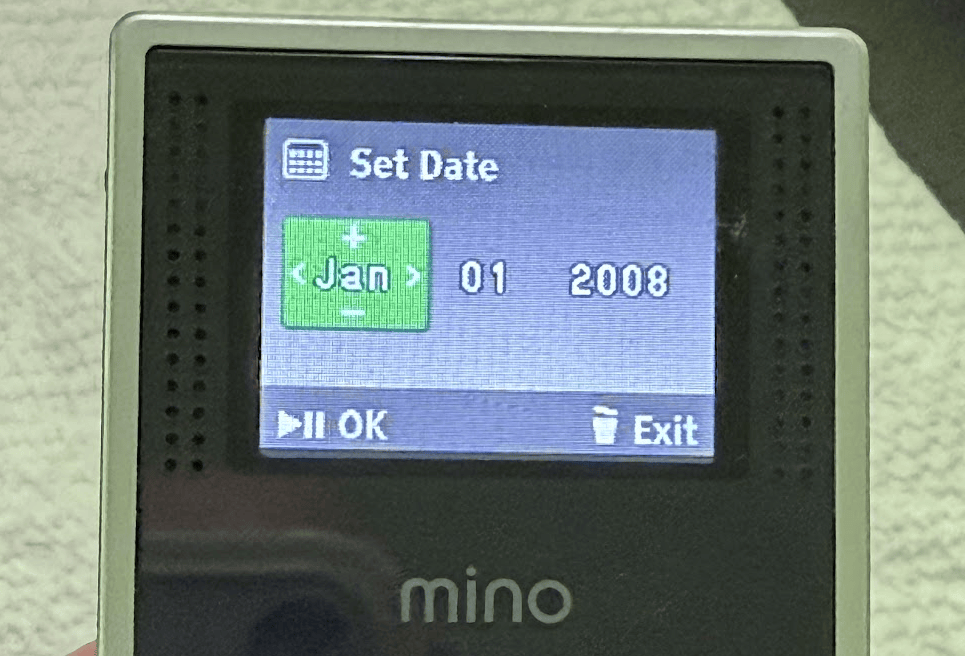
On October 6, I turned on a Flip Mino camera for the first time in 15 years. It asked me to set the date. It defaulted to January 1, 2008. I changed the month and day, but the year setting maxed out at 2020. The Flip team didn’t think anyone would still be using their product in 2026.
So why was I?
Joanna Stern invited me to her first “New Things: New Friends” dinner during SF Tech Week and asked everyone to bring an old piece of technology. Driving into San Francisco, I called my oldest kid to tell them I had taken their car. I explained the dinner and the assignment.
“So you’re just going to walk in yourself without a device? Because you’re old.”
I brought my Flip Mino anyway.
It can’t record anymore. Pressing the record button actually makes it freeze. But playback still works. There were 18 videos on it, and every one was of my two-year-old daughter in a ballet class in 2010.
She’s 18 now and just started college for musical theatre.
The original Flip Video came out in 2007 and this Mino model followed in 2008. It recorded an hour of standard-definition video and had a USB connector that flipped out of the top, hence the name Flip. At the time, it was magic. By 2009, Flip had sold more than two million cameras. Cisco bought the company for $590 million. Two years later, Cisco shut down the entire Flip business.
My kids asked why anyone needed a separate video camera when I already had an iPhone. I explained that in 2008 the iPhone 3G only had a two-megapixel camera and couldn’t record video. The iPhone 3GS and Android added video recording in 2009. Soon the job of a Flip camera was just another feature on your phone. How humbling.
Walking through the Computer History Museum humbles me like that. You walk from decade to decade, seeing wartime computers from the ’40s and mainframes from the ’60s and the personal computers that followed. This is technology that changed the world, before fading away, becoming foundations, features, footnotes, and dead ends.
At Joanna’s dinner, we talked about AI agents, human voices, trust, and what happens to the web when machines do all the clicking.
Today’s frontier AI models are astonishing, but they will become old things too. Some will become foundations. Some will disappear. Entire companies will be reduced to a single button on whatever someone invents next year.
My Flip Mino couldn’t imagine a year after 2020. But it held onto 18 videos of a two-year-old ballerina long enough for her to start college for musical theatre.
Not bad for an old thing.
I would know.

